Easy Crêpe Recipe
Hey, I’m John Canel and today we’re making some tender, buttery, easy crêpes. So, let’s get started.
Ingredients and Mixing
First off, we’re going to combine all of the ingredients either in a large mixing bowl or your blender. Three large eggs, and they can be ice cold, do not have to be room temperature. Crêpes are like a traditional French delicacy. They come from 13th century Britany, which is an area that is now part of France. And they are so good. They’re tender. They’re buttery. They lend themselves to savory or sweet flavors and the whole thing just mixes up in a bowl. It’s so easy. So, don’t be intimidated by the fancy name. I think most people know about crêpes just from crêpe suzette, which is a beautiful orange buttery sauce that gets like cooked with the crêpes and it’s delightful. But crêpes can be used in so many different ways. You could think of them as an elevated wrap. So you could have a Caesar salad crêpe. You could have a teriyaki chicken or a curry crêpe. You can have sweet ones with whipped cream or Nutella and berries, orange curd, lemon curd. The list goes on. They’re delicate. They can hold things. Or you could just enjoy them with a bit of powdered sugar, some maple syrup like you would a regular pancake. I highly encourage you to make these and experiment with what your favorite use for them is.
Measuring the Flour
Zero your scale out. Now it’s time for one cup or 120 grams of all-purpose flour. One thing is that you don’t want to add too much flour because that will definitely change the texture of your crêpes. They should be melt in your mouth, just fall apart tender. So scale is definitely the best way to go. If you’re using a measuring cup, that’s fine. Fluff the flour up in a bag or canister. You’re going to sprinkle it into your measuring cup, then level it out with a knife.
Liquids and Flavorings
To this mixture, I’m adding half a cup of water, 120 mls. 3/4 of a cup of milk. That’s 180 mls. And if this seems familiar to you so far, it’s very much like pancake batter. These are fancy pancakes. And the only real difference, aside from the technicalities of the recipe, is the cooking method. So, we’re going to cook them differently from a pancake because they have to be so paper thin. For a little contrast, I’m adding an 1/8 of a teaspoon of salt. It’s like a generous pinch. A half a teaspoon of vanilla for flavor. And you don’t have to use vanilla. If you’d like an orangey twist, you could use Cointreau or like some orange liqueur or even orange blossom water. You could add a pinch of cinnamon or nutmeg or pumpkin pie spice if you wanted a fall vibe. It’s really up to you. And finally, a tablespoon of melted butter.
Blending and Resting
Pop this onto your blender or grab your whisk and go to town if you’re doing this by hand. You could also use an electric hand mixer. Going to blend this up for about 30 seconds so that it is nice and smooth. All right, that was a lot of agitation for the flour. So, on the plus side, this is really well blended. On the minus side, the gluten is going wild in here. So, we need to give this time to relax and chill out. So, we’re going to pop it into the fridge. If we didn’t chill this out, the texture just would not be correct. Pop this into the fridge for at least 1 hour. You could go up to four. You could do this overnight. So, you can make the crêpes in the morning with zero wait time. Resting the batter gives the flour some time to hydrate. That’ll give you a thinner, more elastic crêpe with less tearing.
Cooking the Crêpes
Once your batter is rested, it’s time to cook your crêpes. And this is the part that people stress out about, and I understand why. You think these are supposed to be perfect circles, like nothing, not too cooked, not too raw, not torn. But let me tell you, just to preface this, they don’t have to be perfect. You’re going to fold your crêpes most likely or roll them or use them in some way. So, you’re not going to notice a very perfect circular shape. Take the stress away. Let’s just focus on making thin pancakes, which is what these are.
Choosing Your Pan
You could use a regular pan for this, but I have a crêpe pan. It is a thick cast iron, very flat pan. If you don’t have one of these, a regular pan will do. And because I’ve seen these gadgets so many times, I actually bought this crêpe maker. It’s like a little gadget where you just dip it in the batter and it cooks on here. So, we’ll test this out. But first, the traditional way. And you’ll notice that I have my little wooden tool soaking in water, which is what it should be. This is what will swoop around, spread our batter out, and give us that paper thin crêpe we all love.
Heat and Butter
Onto medium heat we go. So, my pan’s on medium heat right now, but it’s cold. It needs to warm up. And once it warms, I’m going to brush with melted butter. So, it’s a good idea to have a few tablespoons of butter at the ready. Maybe even 1/4 cup. Butter makes everything better. You notice there was not a lot of butter in the crêpe batter. So, we need to have a nice coating so we have an easy release. So, we have some nice browning and so we have some richness. It’s going to do all these things for us. And I’m going to warn you, your first crêpe will be your worst because the pan will be too hot or too cold. Your technique is going to be a little bit rusty or you’re just starting out. So, just imagine that being the one that you eat in private before anyone else notices.
Pouring and Spreading
I grabbed my batter out of the fridge. Give it a little shake just in case there was any settling. And now we can use it accordingly. I’m pouring mine into a little pourable vessel just to make things easy on myself. Each crêpe will use about 3 tablespoons of batter, but if you want bigger crêpes, you’ll be using more batter. So really feel free to eyeball it. Just know you’re going to be using less than you would imagine. My pan is nice and warm, so it’s time to brush it with some butter. About 3 tablespoons of batter. And use your tool just to spread things out. This is going to be a crêpe knife or an offset spatula situation. So, we’re going to lift it up once cooked and flip it over. These cook so quickly. You’re just looking for the batter to dry out on top of it and be strong enough so that you can flip it over without tearing. Once done, lift it off and plop that onto a plate.
Batch Cooking Tips
For each crêpe, you’ll be adding some more butter and then adding more batter. Swirl it out. Adjusting the temperature as needed. Let it cook. You can see it starts drying out on top really quickly. You want to see a little bit of color as well when you take a peek. Then flip it over. When you lift these off the pan, if you’re quartering them, you can fold it, lift it up, and pop it on the pan just like that. And they’re nice and quartered. If you notice that your butter is burning as soon as you add it on, too much heat.
Etymology and Serving Ideas
The word crêpe of course we think of as French but it’s actually from the Latin crispa which means curled or wavy because the edge of the crêpe will curl up. And as I go on, I’m adjusting the heat downwards because my pan is starting to get too hot. I love crêpes for all sorts of things. You can think of them as a more decadent wrap. So, there’s a crêpe place by my mom’s house. It’s a Japanese crêpe restaurant that has like delicious like chicken crêpes. They do the sweet ones with Nutella and strawberries and the rest of the things. But so delicious, sweet or savory. And you could make a sandwich style wrap with these. You just have to like be a little bit more careful with them.
Storage
You can keep your crêpes stacked in an airtight container for up to 3 days in the refrigerator or freeze them for up to 2 months. I would freeze them in between pieces of parchment paper so they don’t stick together. Just make sure you thaw before using.
Testing the Gadget
I’m going to take this off heat. I’m dying to try the gadget out. So, let’s give it a go. For this method, you have a little bowl, basically like a shallow bowl. You pour your batter in, preheat and dip, lift it up. You’re going to let it cook. Lift the edge up with a spatula. Interesting. I don’t like it. Technically, it’s easier, but there’s no butter here, and you couldn’t use butter because if you did, it wouldn’t stick. It would kind of fall off too much. So, the nice thing is it’s like a very, very, very, very thin crêpe, but it’s not going to be as rich as those ones, which we brushed with butter. And then the other thing that I really don’t like, the main thing is the edge is very dry, so it flakes up. It has a different characteristic. If you have some kind of phobia for using the pan and you but you really want to make crêpes, I get it. Otherwise, the traditional way is definitely my favorite.
Final Serving Suggestion
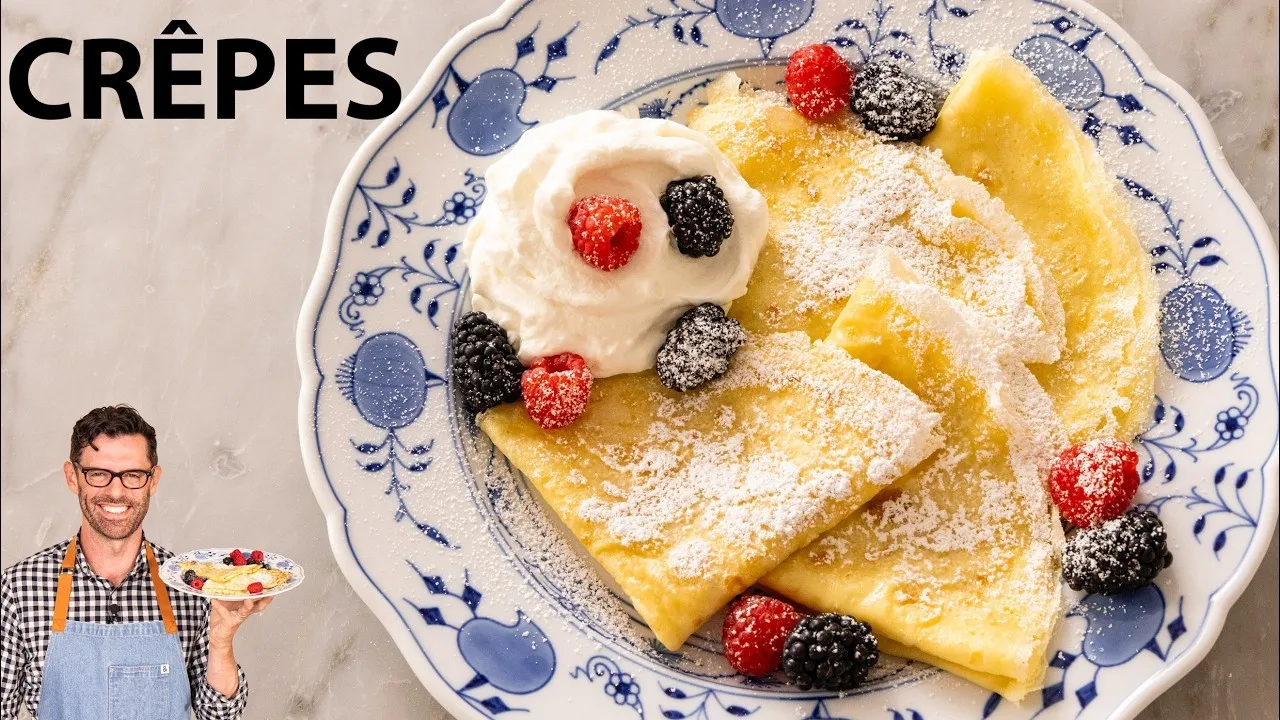
Enjoy with a dusting of powdered sugar and some fresh fruit or with almost any other thing. These delicious guys are ready to enjoy. Buttery, tender, melt in your mouth, and just plain delicious. I hope you get a chance to make this easy recipe.
Leave a Reply