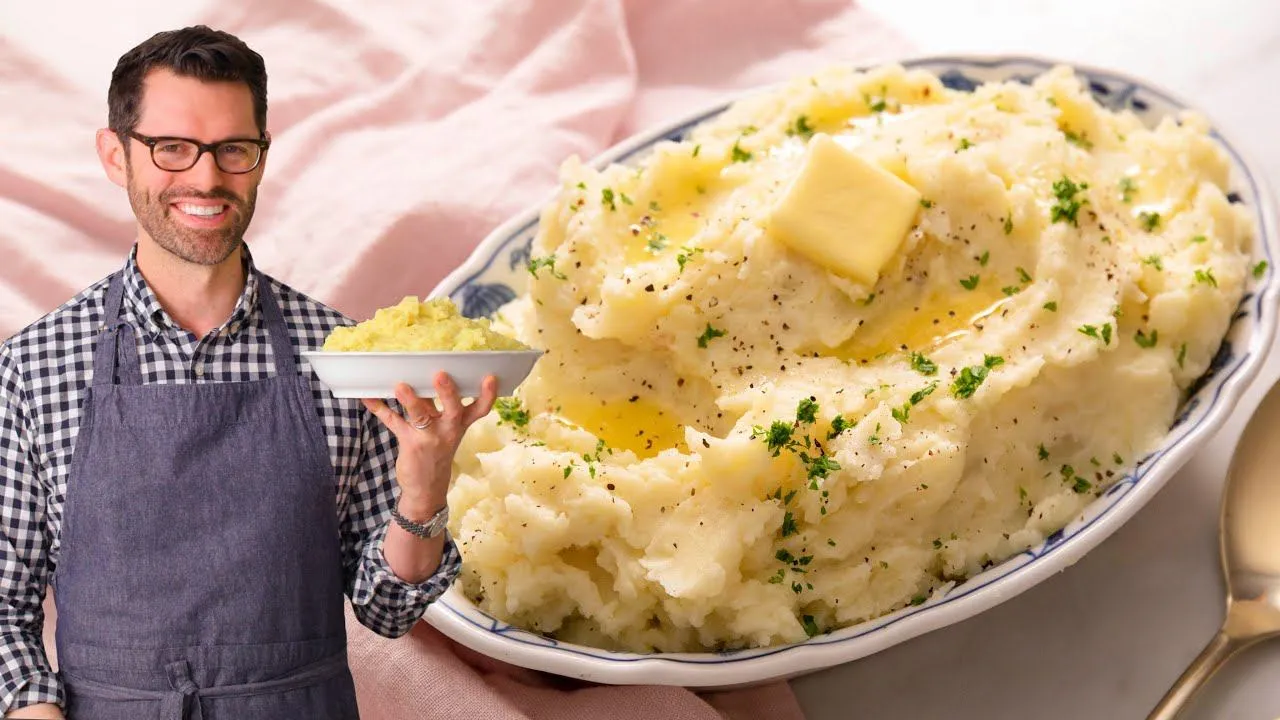
Mashed Potatoes Recipe
Today we’re making the most classic side dish ever: these creamy, fluffy mashed potatoes.
Choosing the Right Potatoes
You have two main options here. One would be russet potatoes, and the other is Yukon Gold. Russet potatoes are going to be really fluffy and just come apart after they’re boiled. Yukon Gold are creamy and amazing; these are my favorite potatoes, so I’m using them today, but you could always use russet or go 50/50.
If you’re using russet potatoes, they have a thick skin, so you definitely want to peel them. Yukon Gold potatoes have a thin skin, so you don’t need to worry about it unless you don’t like having skin on your potatoes.
Prepping the Potatoes
If you boil a whole potato, it needs to cook for a long time before the center is nice and soft. That’s a disaster for mashed potatoes. You don’t want them to absorb a ton of water because when you mash them, all their cells are totally full and they’re going to burst open and release starch.
I’m cutting my potatoes into half-inch-thick slices. Cut them down the middle, and then you can either quarter them or make them into sixths or eighths, depending on how big your potatoes are.
Optional Garlic Addition
Once your potatoes are sliced, you have an optional delicious ingredient to use: garlic. Just boiling some garlic with the potatoes is going to add a ton of amazing flavor, so I highly recommend it. Grab four or five cloves of garlic, give them a good smash to release their skin, and then just plop them in that pile of potatoes. Smashing the garlic gives it a head start on releasing all those amazing oils, so it’s actually better than chopping in this case.
Cooking the Potatoes
Another mistake people make is to have their pot of water boiling so everything happens faster, but you do not want to do that. Place your potatoes and garlic into your pot, and then we’re going to add cold water and bring that to a boil. Fill your pot up with cold water so that the water is about an inch or two above the potato pieces.
Now we’re going to take our potatoes to the burner and add about two teaspoons of salt. Place your potatoes over high heat and bring to a boil, then cook for about 10 minutes or until fork-tender. You do not want to overcook the potatoes. One of the reasons that we used cold water for these was so that they cook evenly. If you add them into boiling water, the outside would be overdone and the inside would still be hard.
After about 8 minutes, it’s time to check your potatoes. Fish some out—I’m using a spider, which is so convenient—and give them a slice. Buttery, garlicky, and perfect. Turn this off of heat, drain your potatoes into a colander, and then place them right back into the pot.
Drying and Mashing
Now it’s time to place your pot over low heat. You want to remove some of the excess water from those potatoes because waterlogged potatoes do not mash deliciously. All right, that’s good.
Butter and Milk Mixture
Now let’s talk about the delicious things we’re adding: mainly butter and milk. You can also use cream or half-and-half if you want this to be extra rich; it’s up to you. I’m cutting one-half cup of butter (113 grams) into roughly tablespoon-sized pieces and adding it to my milk. Warm it in a microwave for about 45 seconds so that it melts and gets nice and warm. You do not want ice-cold ingredients going into your mashed potatoes.
Mashing Technique
My butter and milk are melted now. It’s time for the crucial step: the mixing. I’m going to pour it in and then use a wooden spoon to mix things together. Here we go—that’s nice and mixed. It’s time to mash. You do not want to over-mix your potatoes because you’re going to burst the cells; they’re going to explode with starch, and you’re going to get gluey, gummy potatoes, not fluffy, creamy, amazing, delicious potatoes.
Depending on the texture you want, you can use a potato masher or a potato ricer. I like mine to be smoother, so this is a ricer. Gently mash down—don’t overwork them. You’re really just breaking the potatoes up into pieces that you would enjoy. You can have extra chunky or totally smooth; it’s up to you, but once they’re mashed, it’s good. Don’t go overboard.
Final Seasoning
Creamy and delicious, but they could use some salt and pepper. Add some freshly cracked black pepper, and I’m going to give myself some salt—maybe half a teaspoon at a time. Of course, if you’re using salted butter, you would use less salt.
Creamy, fluffy, garlicky perfection.
Leave a Reply